Our Blog

What causes crooked teeth?

November 18th, 2015

Teeth erupt crookedly for a number of reasons that range from genetics to mouth deformities and serious oral diseases. When extra teeth or abnormally large teeth create a malocclusion (crookedness or misplacement of teeth), the culprit is usually genetic in nature. Other inherited traits involve jaws that are too small to accommodate a full set of teeth and misaligned jaws that did not form properly in the womb.

Can crooked teeth be prevented?

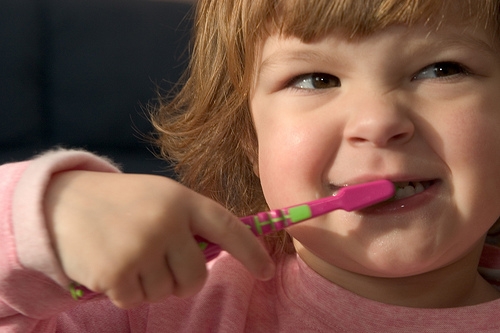
In most cases, underbites, overbites, and crooked teeth are genetically derived and can’t be avoided. Orthodontic treatment with braces will be necessary to correct the condition once the child is old enough to wear them. However, certain early childhood behaviors may also contribute to the development of crooked teeth that can be avoided. These include:

  • Thumb sucking and tongue thrusting
  • Losing baby teeth to decay before permanent teeth have naturally pushed them out of their sockets
  • Allowing pacifier use to continue after front teeth have erupted

Permanent teeth underneath baby teeth are directly affected by the health of baby teeth. If baby teeth are prematurely lost due to decay or trauma, permanent teeth will shift when they start moving upward. Baby teeth are like anchors for permanent teeth that help guide them as they erupt through the gums.

In addition, excellent care of baby teeth is vital to having healthy permanent teeth free of discoloration or decay. Harmful oral bacteria can spread into the gums and reach permanent teeth still buried in the gums. Once attached to a tooth’s enamel, bacteria will begin eroding the tooth even before it has a chance to take its first bite!

When to Start Orthodontic Treatment for Crooked Teeth

Drs. Cartsos and Zavras and our staff suggest that parents bring your child to Convivial Dental around age seven to rule out potential issues with permanent teeth eruption. If problems are discovered, it is not unusual to begin orthodontic treatment at that age. In fact, specific conditions such as crowding and gaps between teeth are easier to correct at an early age.

Early treatment also benefits from the growth process of the jaw, which helps move teeth to normal positions.

What’s an intraoral camera?

November 11th, 2015

One of the greatest features our team at Convivial Dental offers is the ability to see first-hand how we can help our patients. While X-rays help us detect any problems in your mouth and give us valuable information on what is bothering you, they often don’t give Drs. Cartsos and Zavras a complete view of everything that is going on inside your mouth. With the use of an intraoral camera, we can see every aspect of your teeth and mouth with incredible detail, uncovering cracked or fractured teeth, excessive wear, carious lesions, cavities, or other issues that may be hidden. When we can discover oral problems early on, your treatment is much less invasive and often saves you money down the road.

An intraoral camera allows Drs. Cartsos and Zavras to view clear, precise images of your mouth, teeth, and gums and allows us to make an accurate diagnosis.  With clear, defined, enlarged images, Drs. Cartsos and Zavras and our team see details that standard mirror examinations may miss. It’s much easier to understand what is happening in your mouth if you can see the problem on a computer monitor, and it means faster diagnosis and less chair-time for our patients!

Intraoral cameras are small, about the size of a dental mirror, and emit a light onto the tooth. The tooth will emit a color that lets Drs. Cartsos and Zavras determine if the tooth is healthy or diseased. Intraoral cameras also allow us to save your images on our office computer to provide a permanent record of treatments. These treatments can be printed for you, other specialists, and your lab or insurance companies.

For any questions about the intraoral camera, we encourage you to ask Drs. Cartsos and Zavras or our team during your or your child’s next visit or by giving us a call at our convenient Chestnut Hill, Massachusetts office.

My son is turning one. When should I bring him in for a visit?

November 4th, 2015

Drs. Cartsos and Zavras and our team know that cavities know no age boundaries, and that is why we recommend a visit to our Chestnut Hill, Massachusetts office by a child’s first birthday. That also happens to be the opinion of our friends at the American Academy of Pediatrics, as well as the American Dental Association.

Research has shown that more than one in four kids has had at least one cavity by the time they’re four years old. In fact, many children get cavities as early as age two, which is a critical reason why you should pay us a visit sooner rather than later. Your child’s appointment at Convivial Dental also covers topics such as the importance of baby teeth, nutrition, development, and any concerns you may have with your child’s dental health. We believe that your child’s first visit with Drs. Cartsos and Zavras should be an enjoyable and positive one, and we strive to teach good oral care that will enable your child to have a beautiful smile that lasts a lifetime.

To learn more about baby teeth, or to schedule your child’s next visit with Drs. Cartsos and Zavras, please give us a call today! We look forward to seeing you!

Halloween: Candy, costumes, and more!

October 28th, 2015

All Hallows' Eve, more commonly known as Halloween, is a yearly event celebrated on October 31, and one that is anticipated by the young and young at heart all over the world. Some scholars claim that Halloween originated from Celtic festivals that honored the dead or that celebrated the harvest, while others doubt that there's any connection at all to Samhain (a Gaelic harvest festival.) Regardless of its origin, our team at the pediatric dental and orthodontic office of Drs. Cartsos and Zavras hopes that Halloween is fun and enjoyed by all of our awesome patients!

Trick or treat?

In North America, Halloween is predominantly celebrated by children who dress up in costumes, which range from scary to cute, who then go around the neighborhood knocking on doors asking "trick or treat", and they are given candy in return. Trick-or-treating is a time honored tradition, and though many parents groan at the pounds and pounds of candy collected by youngsters and fear for the health of their teeth, there are a few things you can do to help their teeth stay in great shape until the candy is gone:

  • Limit the amount of candy they can consume each day
  • Have them brush their teeth after eating candy
  • Avoid hard, chewy candies as they can stick in hard to brush places
  • Keep candy out of sight to reduce temptation
  • Don't buy candy too far in advance to limit pre-Halloween consumption
  • Help or encourage your children to floss

Halloween Fun

Halloween isn't just about gorging on candy; there are other events associated with this festive day including carving jack-o'-lanterns, painting pumpkins, decorating sugar cookies, bobbing for apples, going to haunted houses, or just curling up on the couch with a bowl full of popcorn and watching some classic, scary movies.

Halloween Around the World

Some countries, like Australia, frown upon Halloween, claiming it is an American event and not based in Australian culture, while others like Italy have embraced the fun and celebrate much as Canadians and Americans do. Mexicans have been celebrating this fun day since around 1960, and it marks the beginning of the Day of the Dead festival. Some countries in Europe have come late to the party, but since the 1990s, countries like Sweden, Norway, and Germany have started celebrating Halloween as well, and finding children in costumes or having ghosts hanging in windows has become commonplace.

Halloween is about fun; stepping outside our normal lives and donning a costume or gathering with friends to knock on doors and ask for candy is as much a part of our culture as hot dogs and barbecue on Labor Day. Have a safe and happy Halloween from the team at Convivial Dental!

request an appointment complete patient forms meet our doctors
Back to Top
NEW - Virtual Visit ×

NEW - Virtual Visit

We are now offering appointments and consultations for pediatric dental and orthodontics virtually through the online platform Doxy.me. This safe, reliable and HIPPA compliant technology will allow us to see you from the convenience of your home.

Schedule Now

Dismiss