Our Blog

Tips for Keeping Your Breath Fresh While You’re in Braces

December 26th, 2024

You’ve got a lot going on in your busy life, and whether it’s school, practice, or simply socializing, you want to put a confident face forward. And part of that confidence comes from knowing your breath is its freshest!

Too often, though, this time of your life makes that goal seem difficult. Let’s look at ways to keep you smiling your brightest and feeling your freshest in any social setting.

  • Watch Your Diet

Sure, garlic, onions, and other pungent food choices are obvious culprits when it comes to bad breath, but did you know that sugars and simple carbs are the food of choice for the bacteria that cause decay, gingivitis, and bad breath? Eating a nutritious, braces-friendly diet will help keep your mouth, your braces, and your breath healthy.

And it’s not just what you eat. Dehydration also causes bad breath. But those caffeinated drinks and sodas that keep you going through the day are the source of acids and sugars that contribute to tooth decay, gum disease, and less-than-fresh breath. Water, milk, and healthy smoothies are a great way to stay hydrated, add vitamins and minerals to your diet, and go easy on your braces.          

  • Keep Up with Oral Hygiene

It’s hard to keep your teeth and gums their cleanest when it seems like you’re always on the go, but good oral habits are just as important now as they were when you were younger.

Brushing after every meal and snack and flossing daily will help get rid of the bacteria and plaque, which lead to cavities. Our tongues also harbor the bacteria that cause bad breath, so finish off your routine with a gentle brush of the tongue, or try a tongue scraper.

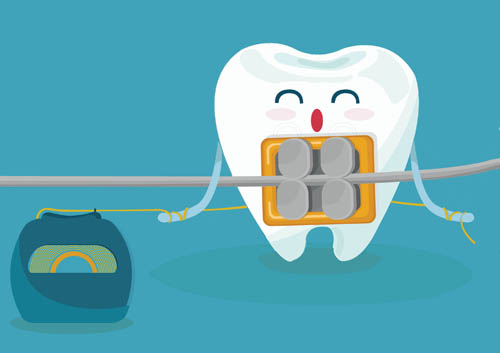
Flossing helps keep gums healthy, which, in turns, keeps your breath healthy as well. Dentists generally suggest flossing once a day, but wearing braces could require flossing more often to make sure you’re getting rid of all those food particles that can become trapped in brackets and wires. Studies have suggested that hormonal changes in teenagers can mean your gums are more at risk for periodontal problems, which can also lead to bad breath, so don’t neglect your gum health!

And be sure to make room in your schedule for regular checkups and cleanings. Your dentist and hygienist will let you know if you’re on track for healthy teeth and gums and fresh breath.

  • Wearing Braces?

Part of careful brushing and flossing means getting to all those places in your braces which trap food particles. Besides being a source of unpleasant odors, food particles lead to plaque buildup and tooth decay, another cause of bad breath.

Drs. Cartsos and Zavras can suggest the best methods for keeping your braces their cleanest—even in hard to reach spots—with suggestions for brushing and flossing techniques. We can also suggest the best and easiest-to-use products for your particular braces, and recommend or prescribe antibacterial mouthwashes.

  • Wearing Aligners?

Aligners are removed before you eat, so it’s easy to forget that they also need attention. Follow instructions given at our Chestnut Hill, Massachusetts office for daily cleaning to prevent saliva and plaque from sticking to your aligners and causing odors. And always remember to brush before you replace aligners after eating a meal or even snacking—otherwise, you’re just trapping the food particles that cause cavities or odors next to your teeth.

You’ve got a lot going on in your busy life, and the last thing you need to worry about is fresh breath. Keep up with your solid dental routines, make sure your braces or aligners are clean and plaque-free, and show the world your healthiest, freshest, most confident smile.

How do braces move my teeth?

December 18th, 2024

Great question! Tooth movement is your body’s natural response to light pressure applied by braces over a period of time (usually two years). Braces work by using brackets that are glued onto your teeth; these brackets have small slots, and that is where Drs. Cartsos and Zavras and our team insert orthodontic wires. These wires are held in place by small elastic ties that fit around the brackets. As time passes during your treatment, these wires apply pressure on your teeth, which sets in motion the movement of your teeth into their desired positions. Each of your teeth has a different size and shape to them, as do the brackets. Each bracket is custom-made for the particular tooth on which it’s supposed to fit.

Not long ago, orthodontists had stainless steel wires and that was about it. Today, however, we have a number of different high-tech wires at our disposal to move your teeth faster and more comfortably.

When you first get your braces on, the first wire or two will typically be very flexible, but still strong enough to apply a constant force on your teeth. As your teeth straighten out over time, however, Drs. Cartsos and Zavras will use progressively thicker and firmer wires to help move your teeth in place for an ideal bite.

Every time you visit our office for an adjustment, we will swap out the wires in order to keep putting pressure on your teeth, which is why it’s so important for you to keep your adjustment visits during your treatment. Most adjustment appointments are scheduled four to eight weeks apart to give your teeth time to move.

As for rubber bands and elastics, most of our patients will need to wear elastics or rubber bands at some point during their treatments. These elastics typically go from one or more of the upper braces to one or more of the lower braces, and pull on your teeth to move them in the direction they need to move in order to achieve an optimal bite.

If you have any questions about wires, brackets, or elastics, or have any general questions about your treatment, please give us a call at our Chestnut Hill, Massachusetts office.

What is a palatal expander?

December 11th, 2024

Orthodontists like Drs. Cartsos and Zavras recommend a first orthodontic visit and evaluation for your child around the age of seven. We will evaluate your child’s jaw and facial development and make sure that there is enough room in the mouth for the permanent teeth when they arrive. One of the recommendations we might make for early treatment is the use of a palatal expander. If you are unfamiliar with this device, let’s take a closer look at why it’s necessary and what exactly it does.

Why do we recommend the palatal expander?

There are two dental arches, composed of the upper and the lower teeth, in your child’s mouth. This arch-shaped design is meant to accommodate all the permanent teeth. Further, when the upper and lower teeth meet, they should result in a healthy occlusion, or bite.

Sometimes, the upper dental arch is simply too small to accommodate all of your child’s permanent teeth, leading to crowding, extractions, and impacted teeth. Also, a too-narrow arch can result in a crossbite, where some of the upper teeth bite inside the lower ones. An improper bite can lead to problems such as TMJ (temporomandibular joint) disorder, improper wear and stress on teeth, certain speech difficulties, and other potential complications. The palatal expander was designed to prevent these problems from occurring.

What is a palatal expander and how does it work?

The expander itself is a device that increases the size of the upper dental arch. Before your child’s bones are finished growing, the space between the two bones of the upper palate is filled with cartilage. This tissue is flexible when children are young, but gradually fuses solidly into place by the time they are finished growing (usually in the early to mid-teens). If the arch can be widened to accommodate the emerging permanent teeth, or to reduce malocclusions, this improvement can also affect the need for, and length of, future dental work.

There are several types of expanders available at our Chestnut Hill, Massachusetts office. These are custom-made appliances, commonly attached between the upper teeth on each side of the jaw. The two halves of the device are connected with a screw-type mechanism that can be adjusted to widen the upper palate and dental arch with gentle pressure. This is a gradual process, with small adjustments usually made once or twice a day to slowly move the bones further apart. As weeks go by, you will notice a successful change in the spacing of the teeth. Your child might even develop a gap in the front teeth, which is normal and will generally close on its own.

If you would like more detailed information, talk to Drs. Cartsos and Zavras about the palate expander. We can tell you what to expect from this treatment if we think it is best for your child’s unique needs, and how to make it as easy as possible for your child. Our goal is to provide your child with the healthiest teeth and bite possible, always making use of treatments that are both gentle and effective.

‘Tis the Season—for Healthy Dental Choices!

December 4th, 2024

It might be the most wonderful time of the year, but if you’re dashing through the snow to an emergency orthodontic appointment, you’re not feeling very jolly. And post-holiday, no one wants to start off their New Year’s Resolutions with “Get Cavities Filled.” How to survive the sweetest of seasons with braces and enamel intact?

Candies and sweets would normally be on the naughty list, but we’re not Scrooges! Indulging in a treat or two is part of the holiday fun, and we have some advice for how to enjoy them guilt-free. But first, some treats are definitely more naughty than nice. Which are the ones that are better as decorations than desserts?

  • Candy Canes

If you’ve ever suffered a broken bracket or a chipped tooth after an innocently biting down on a much-harder-than-expected piece of candy, you know that caution is in order. That’s why we tend to savor candy canes, letting them dissolve slowly in the mouth. Of course, the drawback to this strategy is that now we’re slowly bathing our teeth in sugar, encouraging the growth of plaque and cavity-causing bacteria.

Candy canes, peppermints, and other hard candies are potentially bad for your teeth and braces when you crunch away, and definitely bad for your teeth if you let them dissolve slowly.

  • Gumdrops

Glistening, colorful gumdrops. Roofing your gingerbread house, trimming a gumdrop tree, or simply sitting in a bowl, they are one of the sweetest ways to decorate for the holidays.  And when we say “sweet,” we mean that literally. Most gumdrops are basically made of corn syrup and sugar—and then rolled in more sugar.

But their sugar content isn’t the only problem. This is sugar in an extra-gummy form that sticks between our teeth and along our gums, and gets caught around brackets and wires.

  • Toffees, Caramels, Taffy

They might come in lovely ribboned boxes, but these extremely sticky foods are not a gift to your teeth.

Not only do chewy candies stick to enamel, they stick to fillings, crowns (especially temporary crowns), and orthodontic wires and brackets. No one wants an unexpected trip to the dentist or orthodontist because dental work has been damaged or dislodged!

  • Gingerbread Houses

Nothing says the holidays like a gingerbread house—chewy, sticky gingerbread covered with hard sugar icing, gumdrops, and peppermints. Great for your décor; not so great for your dental health. Eat one gingerbread man if you’re in a spicy mood and leave your architectural masterpiece intact.

Well, this list wasn’t very jolly. So as a little holiday gift for you, here are some suggestions to help you enjoy your desserts in the healthiest way possible.

  • Be choosy.

Just like you search for the perfect presents for your family and friends, take the time to choose the perfect holiday treats for yourself. If you are wear braces, or are worried about cavities, or are just generally concerned with your oral health, stay away from sticky, hard, and excessively sugary desserts.

What can you accept from your holiday hosts with a grateful (and relieved) smile? The occasional soft chocolate should be nothing to stress about—and if you make it dark chocolate, you’ll actually get nutritional bonuses like magnesium and antioxidants. Soft cakes, cupcakes, cookies, and pies should be braces-friendly—yes, they are made with lots of sugar, but it is the holidays after all. Just be sure to follow our next suggestions to make that slice of cheesecake guilt-free.

  • Eat sweets with a meal.

Saliva does more than keep our mouths from getting dry. It also helps prevent cavities by washing away food particles and neutralizing the acids from food and bacteria which damage enamel.

Eat dessert with a meal, and you benefit from increased mealtime saliva production. When you snack throughout the day, this acid-neutralizing ability is greatly reduced.

  • Rinse after eating.

Rinsing your mouth with water after a meal or a snack, especially a sugary one, also helps wash away the sugars and carbs which oral bacteria convert into cavity-causing acids.

  • Brush immediately. (Maybe.)

If you wear braces, you want to make sure there are no food particles stuck around your brackets and wires. If you wear aligners, you want to get rid of food particles on and around your teeth before you replace your aligners after eating.

But if you’ve eaten acidic foods like citrus or colas, the acids in the food can weaken your enamel just enough to cause some potential enamel damage if you scour your teeth immediately after eating. We often recommend waiting about 30 minutes to brush to give your enamel a chance to recover.

Since every mouth is different, especially when you wear braces, talk to Drs. Cartsos and Zavras for the best times and methods for holiday brushing.

You don’t want to ho-ho-hope that we can fit you in at our Chestnut Hill, Massachusetts office for a bracket repair. Make your holiday dessert list and check it twice, and make sure you’re brushing and flossing more often if you’re indulging in seasonal treats—give yourself these two gifts, and you’ll be ringing in the New Year with a beautiful, healthy smile. Sweet!

request an appointment complete patient forms meet our doctors
Back to Top
NEW - Virtual Visit ×

NEW - Virtual Visit

We are now offering appointments and consultations for pediatric dental and orthodontics virtually through the online platform Doxy.me. This safe, reliable and HIPPA compliant technology will allow us to see you from the convenience of your home.

Schedule Now

Dismiss